
Course overview
Whether you are fascinated by the anatomy and physiology of living organisms
or passionate about the role zoological institutions can play in wildlife
conservation, this foundation degree programme will provide you with the
experience you need to pursue your career ambitions working with animals.
This degree will enable you to develop an applied knowledge and understanding
in a range of key subject areas which underpin zoology, including animal
biology, health and welfare, animal behaviour, conservation science, and animal
husbandry.
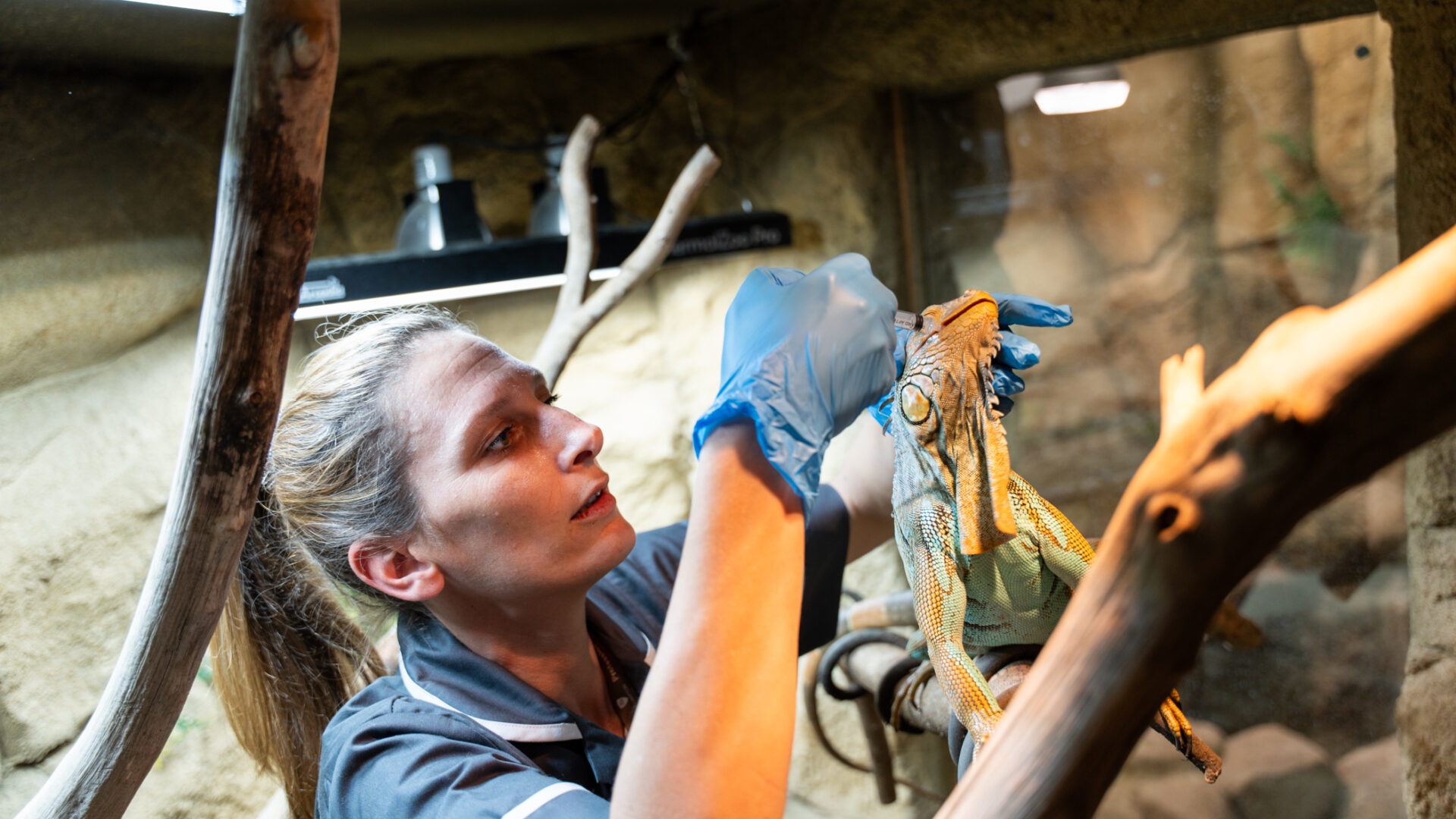
Here at Plumpton College, our immersive degree programme has a strong
emphasis on applied learning and work experience enabling you to develop a range
of vocational skills sought after by employers in the animal industry. Study and
work directly with our extensive collection of over 100 different species of
companion, farm and exotic animal species within Plumpton College’s Animal
Education Centre. You’ll gain valuable practical training in the
application of key field and laboratory techniques in zoology, including some of
the latest methods used in wildlife monitoring and conservation science.
This degree will support you with gaining the experience required to progress
into a diverse range of career pathways working with animals, including the zoo
industry, rehoming sector and conservation organisations.
Why choose us?
Develop an applied understanding of zoology, including the fundamental
principles and key concepts which underpin animal behaviour and
conservation.
Enhance your practical animal husbandry skills and knowledge,
working with a collection of over 100 animal species at the Plumpton Animal
Education Centre and onsite commercial Lambert Farm.
Study in the heart of the South Downs National Park, with direct
opportunities on campus to learn about the ecology, habitats, and conservation
of wild animals living within this legally protected area of the UK.
Develop your professional network and industry awareness via a range of
external trips and visits, including the opportunity to attend a 2-week
international study tour to a wildlife reserve in South Africa. We have
excellent links with the industry, and host regular guest speakers and visits to
other centres, including a visit to Mankwe Wildlife Reserve, South Africa.
You’ll be able to discover 3000 large mammals on the reserve, which is made up
of 42 species plus over 250 types of bird, plus a wide variety of amphibians,
invertebrates and reptiles.
Acquire new employability skills, business management skills, and practical
experience through completing a 150-hour work placement in the animal industry,
benefitting from access to our excellent network of placement providers.
The programme is delivered by a team of highly experienced and dedicated
staff, with expertise in a range of disciplines within the animal sciences and
related fields. Staff teaching on the programme benefit from maintaining strong
professional links to organisations in the animal industry, operating at both a
local and national level.
Class sizes
The cohort size for the FdSc Applied Animal Behaviour and Conservation is
typically between 20-30 students, but this can vary depending on modules and
year of study. In the first year, all modules are compulsory and class sizes
will not vary, apart form in some practical sessions, where groups may be
divided to ensure high standards of animal welfare can be maintained and to
ensure appropriate supervision of students. In the second year of the programme,
students are able to select optional modules, which may mean that group sizes
are slightly smaller (typically around 10-15 students).
Independent learning
At university, you must develop the ability to work more independently than
you have done before. In the early stages of the degree, you will receive a
higher level of support from module leaders and personal tutors. In years 2 and
3, you will need to demonstrate an increasing ability to build upon material
delivered in lectures and laboratories through independent reading. Greenwich
graduates should be able to think and work independently, analytically and
creativelyto solve problems.
Overall workload
If you are studying full-time, you should expect the workload to be similar
to a full-time job. For part-time students, this will reduce in proportion with
the number of courses you are studying.
Each module you study towards this degree is worth 15 or 30 credits. These
represent around 150 or 300 study hours respectively. If you receive 100 contact
hours for a 30-credit module, you should expect to commit 200 hours to
independent study to complete it successfully.
Assessment
Students are assessed through a combination of assessment methods depending
on the modules chosen. A diverse range of methods are utilised on the programme,
including essays, practical portfolios, scientific reports, poster presentations
and field logbooks. All modules are designed to contain formative (practice)
assessment activities, which are ungraded, enabling students to build their
confidence and understanding in advance of formal assessment submission.
Feedback summary
We aim to provide feedback on assignments taken at the college and to release
examination results within 15 working days.
Dates and timetables
The academic year runs from September to June.
Full teaching timetables are not usually available until term has started.
For any queries, contact the HE office (HEoffice@plumpton.ac.uk)
Will I have a work placement?
Students studying at Level 5 on the programme must undertake the Work
Placement module (30 credits) at a relevant external organisation. Students will
be provided with guidance on sourcing a suitable placement opportunity, via
regular tutorials with the module leader and access to Plumpton College’s
database of approved work placement providers. Placements may be undertaken at a
wide range of organisation types within the animal industry, which typically
include zoological institutions and aquariums, livestock farms, animal rescue
centres, wildlife conservation organisations, animal behavioural consultancies,
veterinary practices and animal charities.
How long is my placement?
Students are required to complete a minimum of 150 hours of work experience
at a relevant placement provider within the animal industry (or related
organisations). Usually, students will be expected to complete their placement
hours over the course of the academic year on days where they do not have
scheduled lectures. However, due to the nature of some types of placement, it
may be possible for students to start their placement during the summer
break.
Student support
Higher education students who have a learning difficulty, disability and/or
ongoing health condition may be able to access reasonable adjustments to support
their studies. Support is available to help students apply and access Disabled
Student Allowance through either the Inclusive Learning and Development
Department or the HE Office. One to one tutorial support is available through
academic tutors.
Our library boasts a collection of over 8,000 books, covering a range of key
subject areas within land-based curriculum. The Library also provides students
with access to a variety of magazines, periodicals and academic journals through
online databases.
Learning technology is central to the learning experience of students at
Plumpton College and therefore is supported by dedicated staff within the
College Teaching and Learning Team. The responsibilities of this team are to
help support students with learning technology to enhance the overall learning
experience.
Modules
Year 1 You will be required to study the following compulsory modules:
- Introduction to Business Management (15 credits)
- Introduction to Business Management (15 credits)
- Principles of Conservation Science (15 credits)
- Study and Research Skills (15 credits)
- Animal Behaviour and Communication (15 credits)
- Animal Health and Welfare (15 credits)
- Comparative Animal Anatomy and Physiology (15 credits)
- Management of Animal Collections (15 credits)
- Principles of Animal Biology (15 credits)
Year 2 You will be required to study the following compulsory modules:
- Work Placement (30 credits)
- Applied Sampling Methods in Conservation (15 credits)
- Independent Enquiry (15 credits)
- Research Methods and Statistics (15 credits)
- Animal Welfare and Ethics (15 credits)
- Applied Animal Behaviour Management (15 credits)
- Students are required to choose 15 credits from this list of options.
- Behavioural Ecology (Plumpton) (15 credits)
- Wildlife Conservation (15 credits)
- Animal Learning and Training (15 credits)
Modules may be subject to change.
How will I be assessed?
You’ll be assessed using a varied range of methods, depending on the modules you choose. This gives you different ways to demonstrate your knowledge, practical abilities and understanding throughout the programme.
Assessment methods may include:
-
- Essays
-
- Written examinations
-
- Practical portfolios
-
- Scientific reports
-
- Poster presentations
- Field logbooks
You’ll also complete regular formative assessments during your studies. These ungraded practice activities are designed to help you check your understanding, develop your skills and build confidence before submitting formal assessments.
You’ll receive guidance and feedback from your tutors throughout the programme, helping you prepare effectively and continue to improve.
What is it like to be a student on this course?
Students on the FdSc Applied Animal Behaviour and Conservation course describe their experience as engaging, practical and inspiring. You’ll learn through hands-on activities that bring animal behaviour, welfare and conservation to life, helping you connect academic theory with real-world practice.
You’ll benefit from:
-
- Practical, experience-based learning
-
- Supportive and knowledgeable lecturers
-
- Small-group teaching
-
- Opportunities to explore animal behaviour, welfare and conservation in depth
- An international field trip, subject to availability
A particular highlight for many students is the opportunity to take part in an international field trip. This gives you the chance to experience wildlife conservation in an international setting, develop your practical understanding and see how your studies relate to real conservation work.
The course is designed to help you build confidence, broaden your experience and prepare for future careers in animal behaviour, welfare and conservation.
Industry links
You’ll benefit from our strong links with local and regional organisations working across animal behaviour, welfare and conservation. These connections help bring your studies to life, giving you insight into current professional practice and the challenges faced by the sector.
You may have opportunities to engage with organisations including:
-
- Knepp Estate
-
- Drusillas Zoo Park
-
- Brighton SEA LIFE
-
- Tilgate Zoo
- Raystede Centre for Animal Welfare
Through these links, you’ll explore real-world conservation issues, take part in field-based learning and see how animal behaviour and welfare knowledge is applied in professional settings.
These experiences will help you build practical skills, broaden your understanding of the sector and prepare for future opportunities in animal care, conservation and related careers.
Student testimonial
“This course is an informing and fun course, located in a stunning setting in the South Downs in Sussex. There is the opportunity to access the amazing Animal Education Centre and the Plumpton Estate farm and go out and about on the large campus estate to learn practical skills useful for your career aspirations. The lecturing staff support you every step of the way across the two years, helping you to achieve your full potential.”
Issy, Applied Animal Behaviour & Conservation
“A lifelong passion for wildlife and conservation led me to give up my career and pursue a new one related to my interests. My first year has flown by and I’ve learnt so much in what feels like a flash! Lecturers are knowledgeable and supportive, and the smaller environment is ideal for someone who has been out of education for a while. Having a range of animal species onsite is great for gaining practical skills and species-specific insights.”
Stacia, Applied Animal Behaviour & Conservation
Progression routes
Graduates of the FdSc Applied Animal Behaviour and Conservation can progress into roles such as animal welfare technician, zoo keeper, wildlife conservation assistant, ecological survey assistant, conservation education officer, animal behaviour assistant or research support assistant.
The course also offers a clear route into further study at Plumpton, where students can top up to a full bachelor’s degree through one of two pathways: BSc (Hons) Applied Animal Behaviour and Welfare or BSc (Hons) Applied Zoology and Animal Conservation.
Start dates
Not ready to apply?
Register your interest