
Course overview
This degree in Environmental Management and Conservation is ideal for those
seeking a career in applied environmental management, conservation or
countryside management, with a strong focus on climate change, biodiversity, and
sustainable land use. The degree prepares you to work with conservationists,
farmers, landowners, and environmental organisations to deliver practical
solutions for managing land sustainably.
You will develop the skills to assess ecosystem health across a range of UK
habitats and produce achievable, financially viable land management plans that
balance environmental, economic, and social priorities. Study combines theory,
practical fieldwork, and applied learning, covering habitat and estate
management, survey and monitoring techniques to UK standards, environmental
legislation and land-use policy (including Environmental Land Management
schemes), and essential business skills, such as funding mechanisms, people
management, and also essential digital mapping and GIS skills.
This two-year degree provides a strong progression route into employment or
further study, including progression to a BSc (Hons) top-up degree, supporting
careers in environmental and countryside management, conservation, environmental
consultancy, agriculture, estates, and public sector land management.
Why study Environmental Management at Plumpton College?
Plumpton College offers an immersive learning environment on its 800-acre
estate at the foot of the South Downs National Park, providing direct access to
diverse habitats and real-world land management scenarios. You will be taught by
a highly experienced Environmental Management team with strong industry links,
and study a degree quality assured by the University of Greenwich (TEF Gold),
supporting excellent graduate outcomes. Through close links with our
neighbouring university, you may also be eligible to progress to their BSc
top-up degree in environmental management.
Entry Requirements
UCAS Tariff: 56 points
We consider a wide range of Level 3 equivalent qualifications in science
related subjects such as Countryside Management, Environmental Science, Biology,
Chemistry, Horticulture, Agriculture, and Physics.
Level 3 qualifications considered includes T Levels, A Levels and Extended
National Diplomas (L3), Irish Highers, Scottish Highers, as well as Access to HE
qualifications.
We would also consider candidates who have completed a Level 3 Crop
Technician or Countryside Ranger apprenticeship.
In addition to the above Level 3 qualifications, candidates must have at
least five GCSEs at grade 4 (or above) and this must include English Language
(Grade 4 or above) and Maths (Grade 4 or above).
Students must be a minimum of 18 years old upon entry.
Students with English as a second language will be required to have gained
IELTS Level 6.5 overall with Level 6.0 in writing.
Mature students with relevant industry experience, but without the minimum
academic qualifications, may be eligible for entry. This will be assessed at
interview using a portfolio evidence and employer references.
Modules
This two-year full-time degree is validated by the University of Greenwich. Students will study a suite of modules over the two year duration of the course.
Year 1 modules include:
Sustainable Landscape Innovation and Generation (30 credits)Explore innovative approaches to designing and managing landscapes that enhance biodiversity and ecosystem services.
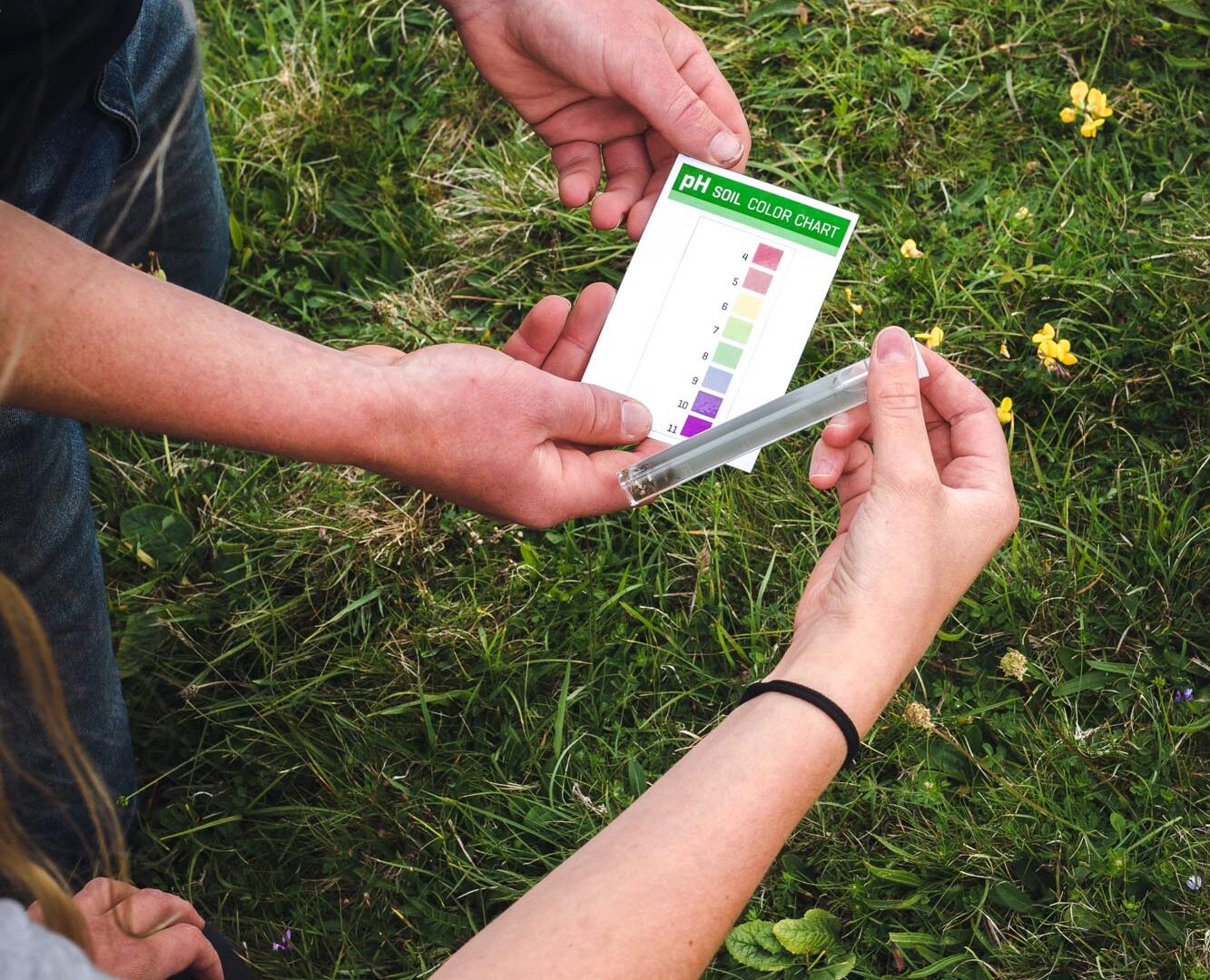
Understanding Soils and Plants for Effective Management (30 credits)Develop core knowledge of soil science and plant ecology to support sustainable land use and habitat management.
Study and Research Skills (15 credits)Develop essential academic, research, and professional skills for success in higher education and the land-based sector.
Species Monitoring for Sustainable Landscapes (15)Learn key survey and monitoring techniques used to assess species populations and habitat condition to UK standards.
Early Career Development (30 credits)Explore career pathways within the land management and conservation sector while developing professional skills including CV writing, interview techniques, leadership, volunteering, and public engagement.
Year 2 modules include:
Climate Science for Global Futures (15 credits)Develop an applied understanding of climate science and its implications for land management and environmental resilience.
Livestock and Conservation (30 credits)Explore how different livestock species influence habitats and landscapes, examining their historical use and future role in conservation management.
Sustainability of Aquatic Ecosystems (15 credits)Study the management and conservation of freshwater and aquatic habitats within sustainable land management frameworks.
Geographical Information Systems (GIS) for Conservation (15 credits)Learn to use GIS and digital mapping tools to analyse landscapes, habitats, and land-use change.
Independent Enquiry (15 credits)Undertake a focused research project in sustainable land management aligned with your interests and career goals.
Work Placement (30 credits)Gain practical industry experience through a structured placement, supporting employability and career progression.
Modules may be subject to change.
How will I be assessed?
Assessment on the FdSc Sustainable Land Management uses a varied range of methods across modules to reflect both academic study and applied, industry-relevant skills required within the land management and conservation sectors. Depending on the modules studied, assessment may include written reports, essays, practical and fieldwork portfolios, habitat surveys, management plans, presentations, examinations, reflective logs, and applied projects.
Assessments are designed to reflect real-world land management scenarios and professional practice, enabling students to apply theoretical knowledge alongside practical and technical skills. Where appropriate, assessment tasks allow flexibility in the choice of habitats, case studies, or management contexts, supporting students to explore areas aligned with their personal interests and career aspirations.
All modules incorporate formative (practice) assessment activities, which are not formally graded. These are designed to support learning by helping students build confidence, develop subject understanding, and prepare effectively for summative assessment submission.
What is it like to be a student on this course?
Students on the FdSc Sustainable Land Management course describe their experience as practical, supportive and career-focused. They enjoy hands-on learning through fieldwork, experiments, outdoor activities and GIS, alongside small-group teaching and discussion. With experienced, approachable lecturers and a positive class atmosphere, students feel they are gaining relevant knowledge, professional skills and real-world insight that prepares them well for future careers in the land-based sector.
Industry links
Students benefit from Plumpton’s location at the heart of the South Downs, with opportunities to engage with organisations such as the South Downs National Park Authority, Sussex Wildlife Trust, Brighton & Hove City Council at Stanmer Park, the National Trust, Natural England and other local conservation and land management partners. These links help connect classroom learning with real habitats, real projects and real career pathways.
Student testimonial
“At Plumpton, I felt I was learning from people who really care about, and understand the industry. I really enjoyed and benefitted from meeting likeminded people, both fellow students as well as lecturers and external professionals in the industry.”
Emma – FdSc Sustainable Land Management Graduate
Progression routes
Graduates progress into a wide range of careers in conservation, countryside and estate management, biodiversity monitoring, habitat restoration and rural land-based industries. The course also provides a strong foundation for further study, including progression to a related BSc top-up degree and ongoing professional development within the environmental and land management sector.
Start dates
Not ready to apply?
Register your interest