
- Duration
Typically 15 months on-programme with an additional End Point Assessment period, depending on prior experience and opportunities to develop skills in the workplace.
- Location
- Plumpton College
Course Overview
This apprenticeship is for people already working in operational forestry, woodland management or contracting who are ready to take the lead on planning and running work on live forestry sites. You’ll learn how to commission and manage a wide range of activities, from ground preparation and planting through to timber harvesting, infrastructure works and habitat management.
As a Forestry Works Manager you’ll be the key link between landowners, contractors, hauliers, regulators and the public – making sure that all operations are safe, efficient and environmentally responsible, and that they meet the UK Forestry Standard and other legal requirements.
Modules
An employee in this occupation will be responsible for:
- Planning and overseeing forestry operations such as felling, timber harvesting, ground preparation, establishment, access works and habitat management.
- Leading on site health, safety and welfare, including risk assessments, incident planning and promoting a strong safety culture.
- Managing access for workers, visitors and the public on operational sites, including where sites interface with the public road network.
- Protecting environmental, historic and cultural features on and around the site, working in line with the UK Forestry Standard and relevant consents and designations.
- Selecting, appointing and managing competent contractors and staff, and monitoring work quality, performance and compliance with specifications.
- Coordinating the safe and efficient movement of timber from forest to roadside and uplift by hauliers.
- Keeping clear records, maps and reports so that work, competence and site information can be monitored, shared and reviewed.
What apprentices will learn
- How to develop and agree operational plans for forestry works, including safe systems of work and suitable operational methods.
- Techniques for pricing and resourcing forestry jobs, balancing safety, environmental responsibilities and value for money.
- How to interpret woodland management plans, creation plans, maps and technical specifications for operational delivery.
- Legal duties and guidance relating to health, safety, welfare and equality on forestry sites, and the roles of different duty holders.
- How to identify hazards on forestry sites, carry out risk assessments and put in place practical control measures.
- Environmental protection in forestry, including soils, water, designated habitats, archaeology and landscape, and when to involve specialists.
- Planning the safe and efficient use of forestry machinery and equipment, including maintenance and new technology.
- Tree health threats, biosecurity measures and how tree condition affects operational choices.
- How to oversee ancillary operations such as civil engineering, vegetation clearance and habitat works associated with forestry sites.
- Relationship management skills for working with landowners, contractors, regulators, communities and other stakeholders.
- Collecting, managing and interpreting forestry data and spatial information, and using it to produce clear reports and records.
- Planning and managing your own workload, and maintaining up-to-date professional knowledge through continuing professional development (CPD).
Key learning outcomes
By the end of the apprenticeship, apprentices will be able to:
- Plan and manage end-to-end forestry operations on a site, ensuring work is delivered safely, on time and to specification.
- Lead on health, safety, welfare and wellbeing for forestry teams, modelling good practice and challenging unsafe behaviour.
- Protect environmental, historic and cultural features during operations and demonstrate compliance with the UK Forestry Standard.
- Appoint, brief and manage contractors and staff, monitor work quality and address performance issues constructively.
- Manage site access and public interface, including roadside working and situations where forestry sites overlap with recreation and other land uses.
- Use maps, digital tools and site data to plan work, track progress, manage incidents and report outcomes.
- Communicate clearly and professionally with landowners, colleagues, regulators, hauliers and local communities to maintain positive relationships.
- Review completed operations, evaluate what worked well and recommend improvements for future projects.
- Take responsibility for their own professional standards and ongoing development as a forestry professional.
On successful completion, apprentices will have a Level 4 qualification aligned to professional recognition. The standard meets the requirements for Registered Environmental Technician (REnvTech) with the Society for the Environment and aligns with Technical membership of the Institute of Chartered Foresters (ICF), helping apprentices build a recognised professional career in sustainable forestry.
Delivery model
Teaching and learning are delivered through a blend of on-campus block weeks, online sessions and work-based learning, supported by site visits, seminars and guest speakers from the forestry industry. This allows apprentices to apply new knowledge directly to live projects in their workplace while benefitting from Plumpton College’s specialist forestry and arboriculture facilities.
Entry Requirements
Maths and English assessment
For all apprentices aged 18 or under at time of enrolment, who are unable to evidence previous English or maths GCSE (or equivalent) at grade 4/C will be required to attend Functional Skills classes and achieve the necessary level to complete their apprenticeship.
For all apprentices aged 19 and over at time of enrolment, Functional Skills is an optional component of your apprenticeship programme. As a college, we support the progression of all our apprentices and provide the opportunity to undertake Functional Skills English and/or maths as part of your apprenticeship qualification. Throughout your pre-enrolment, you and your employer will have the opportunity to discuss this in more detail to help facilitate your decision.
Job role and experience suitability assessment
Apprentices must be employed in a role with duties that will allow the development of the necessary skills, knowledge and behaviours. To qualify for apprenticeship funding the apprentice must develop significant new skills and knowledge on the programme.
Desired: previous Level 3 Arboriculture qualification or relevant experience within the industry
To enrol onto an apprenticeship programme you need to be employed with a contract of employment. If you have an employer lined up or are already employed please contact our Business Services team on 01273 892127 or via email.
If you do not currently have an employer please visit the main Apprenticeships page for guidance on how to find and apply for an apprenticeship opportunity or register for our Talent Bank service.
If you are an employer and would like to recruit or enrol an existing employee onto an apprenticeship please contact our Business Services team on 01273 892127 or via email.
If you would like to express an interest in joining this course, please email business@plumpton.ac.uk
Other courses that may interest you
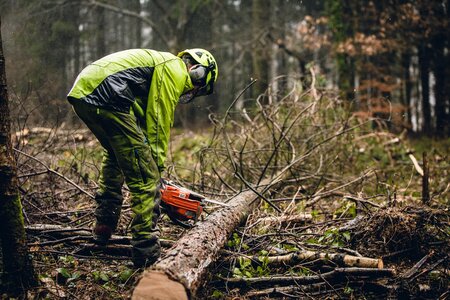
NEW: FREE Forestry Skills Bootcamp (West Sussex)
Launch or advance your career in arboriculture with this FREE, hands-on Skills Bootcamp. Gain industry-recognised NPTC qualifications, practical chainsaw and tree work skills, and the certificates you need to stand out in this growing green sector.
Skills Bootcamps are free*, flexible courses of up to 16 weeks, giving people the opportunity to build up sector-specific skills and an offer of an interview with an employer upon completion.
*Eligibility critera apply
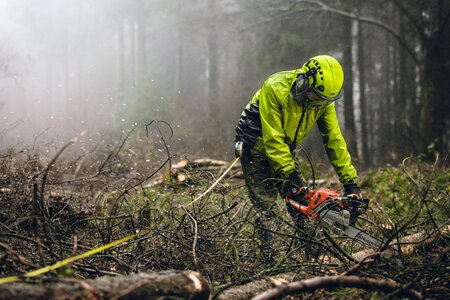
Plumpton College Talent Bank for Forestry & Arboriculture Apprentices
Are you looking to do an apprenticeship but don’t yet have an employer?
Register with our Apprenticeship Talent Bank Service for up to date information on our latest vacancies and forthcoming apprenticeship events.