- Duration
1 Year
- Attendance
- 1 Day a Week | Wednesdays
- Location
- Plumpton College
Course Overview
What will you study?
Learners will develop effective study skills and engage in reflective practice, strengthening their clinical reasoning and critical thinking. They will gain a clear understanding of the importance of ongoing professional development, working within their scope of practice, and adhering to the legal, ethical, and professional standards expected of a canine hydrotherapist.
They will explore the principles of optimal hydrotherapy suite design, sustainable practice models, and current health and safety requirements within the field. Learners will also deepen their understanding of canine behaviour in context, the ethical responsibility of working with consent, and the significance of Therapeutic Handling techniques in hydrotherapy.
In addition, learners will study canine functional anatomy and biomechanics, the pathophysiology of common conditions, and breed‑specific biological considerations. They will demonstrate competence in clinical risk assessment, risk rating, health monitoring, and emergency canine first aid, alongside assessment processes, clinical reasoning, and advanced hydrotherapy treatment techniques.
Finally, learners will develop the ability to evaluate and analyse hydrotherapy water management systems to ensure safe, effective, and high‑quality practice.
What does a typical week look like?
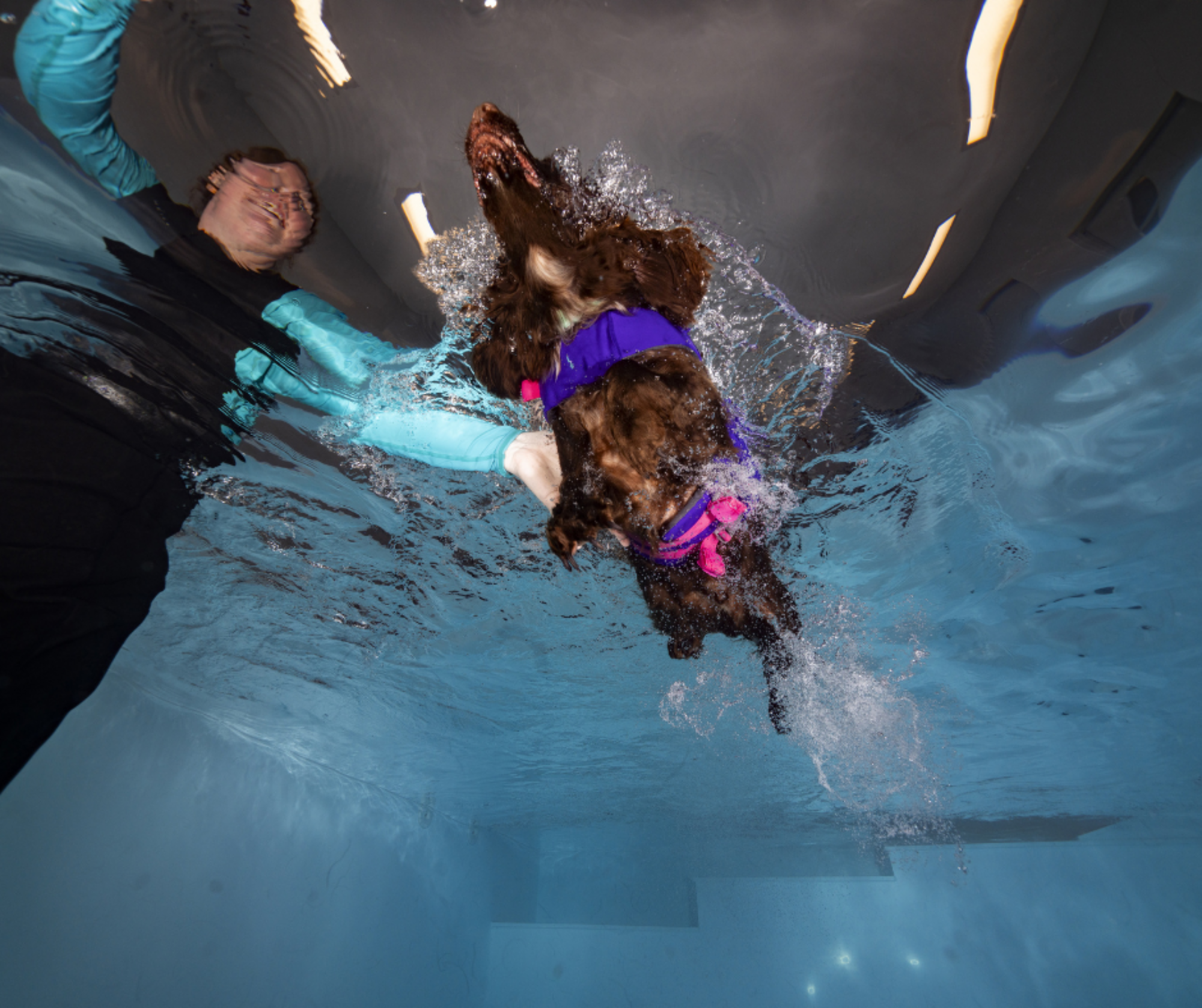
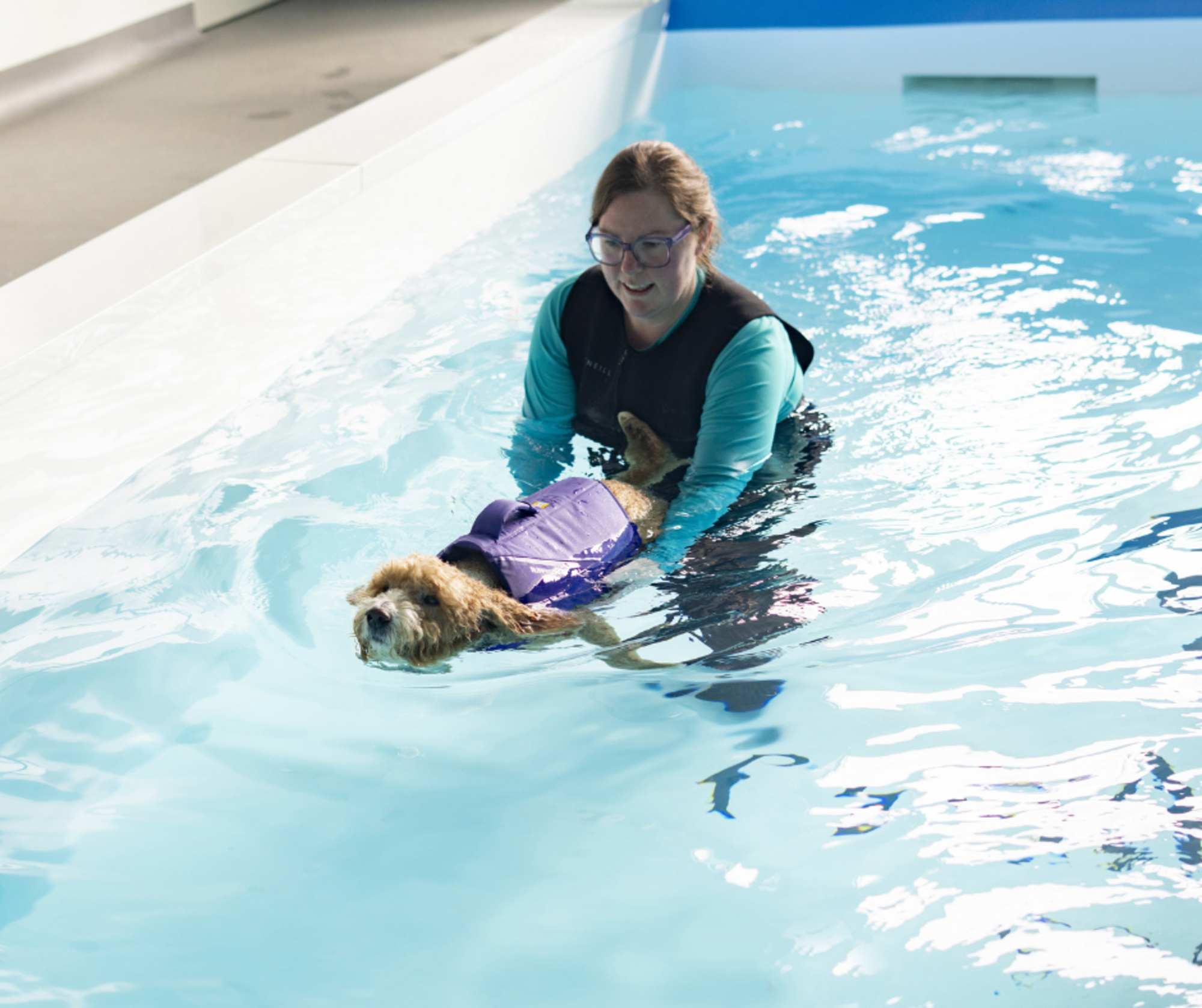
You will spend one day per week on campus engaging with a range of classroom-based activities as well spending time in the hydrotherapy suite with canine patients in the pool and underwater treadmill. You will be required to complete coursework outside of this time.
Modules
- Clinical Risk Assessment, Health Monitoring and First Aid
- Water Management and Sustainable Practice
- Professional Practice
- Canine Functional Anatomy and Biomechanics
- Conditions Presented for Hydrotherapy
- Canine Behaviour, Enrichment and Therapeutic Handling
- Clinical Reasoning and Assessment Processes
- Advanced Techniques in Aquatic Treadmill Therapy for Canine Hydrotherapists
- Advanced Techniques in Hydrotherapy Pool Treatment for Canine Hydrotherapists
Clinical Risk Assessment, Health Monitoring and First Aid
Water Management and Sustainable Practice
- The unit aims to equip learners with the clinical skills, knowledge, and understanding necessary for effective water testing and developing actionable solutions, which are essential for safe practice and fulfilling both professional and legal responsibilities. The unit will enable learners to address water management challenges within a canine hydrotherapy setting, supporting successful centre operations and the delivery of a high-quality professional service. Adhering to legal frameworks and implementing effective policies and protocols for safe, up-to-date practice is a fundamental requirement for all healthcare professionals.
Professional Practice
- In this unit, learners will develop a comprehensive understanding of their professional obligations, responsibilities, and accountability as practitioners in canine clinical hydrotherapy. Learners will explore and reflect on potential moral and ethical conflicts that may arise in clinical practice, highlighting the importance of working within their scope of practice, recognising their limitations, and adhering to the Code of Practice set by their Professional Association. The unit fosters professionalism by developing interpersonal and effective communication skills essential for working collaboratively as part of a multidisciplinary team (MDT). Learners will learn to communicate effectively, manage conflicts professionally, and understand their responsibility to seek appropriate guidance and support.
Canine Functional Anatomy and Biomechanics
- In this unit, learners will develop a comprehensive understanding of canine functional anatomy and biomechanics, essential for conducting accurate assessments and delivering effective clinical hydrotherapy treatments.
Conditions Presented for Hydrotherapy
- In this unit, learners will develop their understanding of breed biology and the predisposition of specific breeds to common canine conditions. With this knowledge, learners can apply critical thinking to connect these predispositions to the resulting pathophysiology. Learners will gain insight into the normal conformation of various breeds and how specific pathophysiological conditions affect balance and movement in relation to common ailments and musculoskeletal injuries. Learners will also learn how to identify inefficient secondary movement patterns and sequences that develop in different cases and understand the impact these have on the overall health and well-being of affected canines.
Canine Behaviour, Enrichment and Therapeutic Handling
- In this unit, learners will develop their knowledge and understanding of canine behaviour within the context of a hydrotherapy environment. Learners will also develop the skills to assess and apply canine therapeutic handling techniques and clinic enrichment strategies.
Clinical Reasoning and Assessment Process
- In this unit, learners will be equipped with the knowledge and skills needed to conduct comprehensive canine assessments within a clinically reasoned framework, ensuring accurate and reliable findings. Hydrotherapists must effectively evaluate risks, assess the suitability of canine patients for hydrotherapy, gather relevant data, and apply a clinical reasoning process to analyse this information. Learners will form the foundation for sound clinical decision-making, enabling the selection of appropriate techniques to provide each canine with a safe and effective treatment plan. Learners will develop a clear understanding of the assessment process as it relates to safe practice, emphasizing the importance of operating within their professional competencies and scope of practice at all times.
Advanced Techniques in Aquatic Treadmill Therapy for Canine Hydrotherapists
- In this unit, learners will develop their clinical competencies and proprioceptive treatment techniques when using an aquatic treadmill, with the goal of achieving positive outcomes for each canine client. Learners will apply their knowledge of canine assessment processes, behaviour, functional anatomy, breed biology, and the pathophysiology of underlying conditions to make informed decisions when selecting aquatic treatment techniques. Learners will combine clinical theory with practical application, ensuring that they are equipped to create tailored treatment plans that address the individual functional and mobility needs of each canine.
Advanced Techniques in Hydrotherapy Pool Treatment for Canine Hydrotherapists
- In this unit, learners will advance their clinical competencies and proprioceptive treatment techniques in the use of a hydrotherapy pool, focusing on achieving optimal outcomes for each canine client. Learners will integrate their knowledge of canine assessment processes, behaviour, functional anatomy, breed biology, and the pathophysiology of underlying conditions to make clinically reasoned decisions when selecting aquatic treatment techniques. Learners will further develop both clinical and practical application skills, enabling them to develop tailored treatment plans that address the unique functional and mobility needs of each canine.
Assessment
Assessment will be carried out through a combination of practical evaluations and a written portfolio, supported by written tasks and additional methods such as quizzes and presentations.
Entry Requirements
This course is aimed at aspiring hydrotherapists. It is tailored for individuals who already have experience working with canines, either in a paid or voluntary capacity, as well as those seeking a career change driven by a passion for animal care.
You must be aged 18 and above. There are no other formal entry requirements for this qualification; however, due to the nature of the qualification content, those undertaking the qualification must have a proficient level of spoken and written English (e.g. GCSE Grade C / Grade 4 or above or equivalent).
Course Cost
The cost of the course can be spread over a 12-month period, interest free.
Funding for this course may be available to you.
Wetsuit/waders approx. £50 if you don’t already own or have access to borrow
PPE required
A clean wetsuit plus water shoes or a pair of waders are required for practical days. If wearing a wetsuit, it is advisable to bring a fleece that can be worn over this when you are out of the water to stay warm between patients. If wearing waders, please ensure these will not fill with water when in the pool (approx. depth 1.2-1.3m)
Learner changing and showering facilities are available next to the hydrotherapy suite, please bring your own towel and toiletries.
What is it like to be a student on this course?
Industry Links & Affiliation
This qualification is currently endorsed by the National Association of Registered Canine Hydrotherapists (NARCH) and The Institute of Registered Veterinary & Animal Physiotherapists (IRVAP) and recognised by the Canine Hydrotherapy Association (CHA) allowing choice of registration following certification.